The Last Television
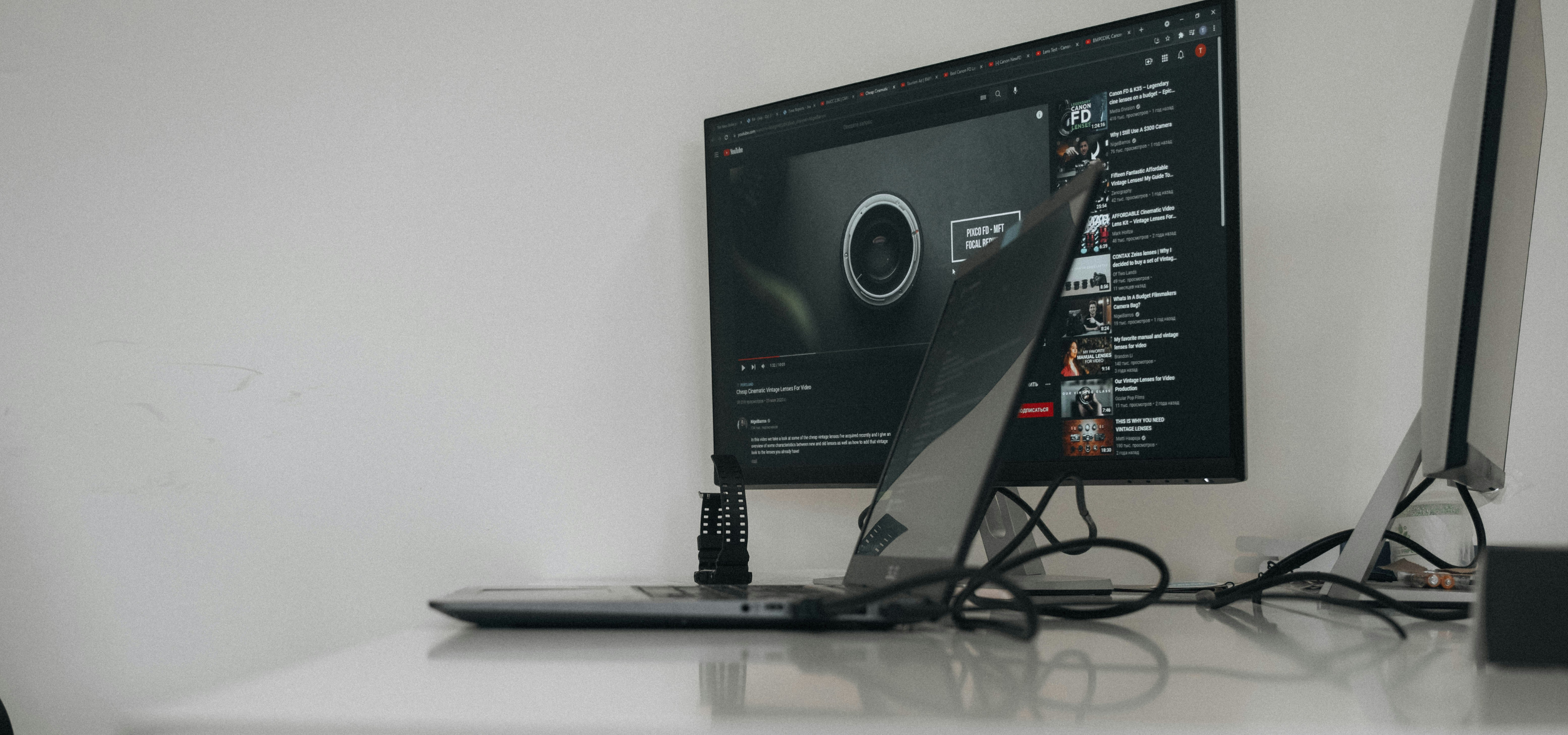

The Last Television
YouTube and AI are about to rewrite the rules of media. Here is what I think happens next.
There is a moment in every technological shift where the old guard decides it is a fad. They said it about radio. They said it about television. They said it about the internet. And right now, in boardrooms across the world, people are saying it about YouTube.
They are wrong. And this time, the consequences of being wrong are going to be sharper than ever before.
We are sitting at the intersection of two forces that, on their own, would be significant. Together, they are genuinely seismic. YouTube - already the world's second largest search engine, already the most watched platform across every age group - is about to be turbocharged by artificial intelligence. Not in the glossy, vague way that AI gets talked about in pitch decks. In practical, structural, deeply disruptive ways that will reshape what media looks like within the decade.
Here is what I think actually happens next.
The death of passive viewing
Traditional television was built on one foundational assumption: that audiences would sit down at a scheduled time and watch whatever they were given. The remote control was the most agency viewers ever had. You could change the channel. That was it.
YouTube dismantled that model entirely. It handed control to the viewer and, critically, to the creator. No commissioning editors. No timeslots. No minimum budget. Anyone with a camera and something worth saying could compete for attention on the same platform as the BBC.
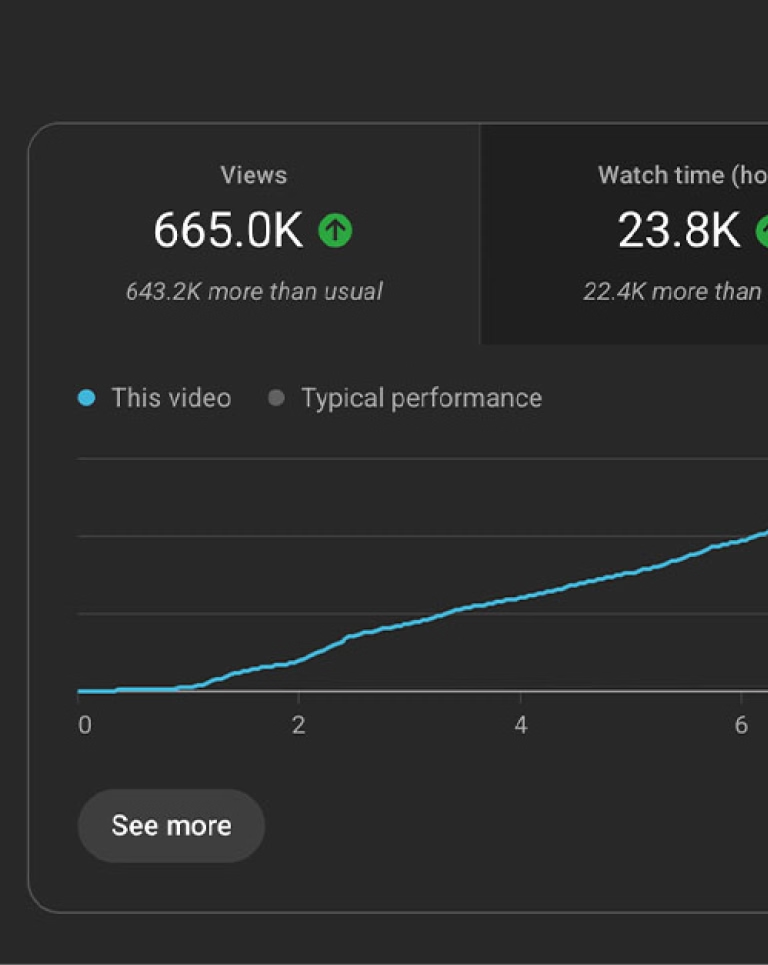
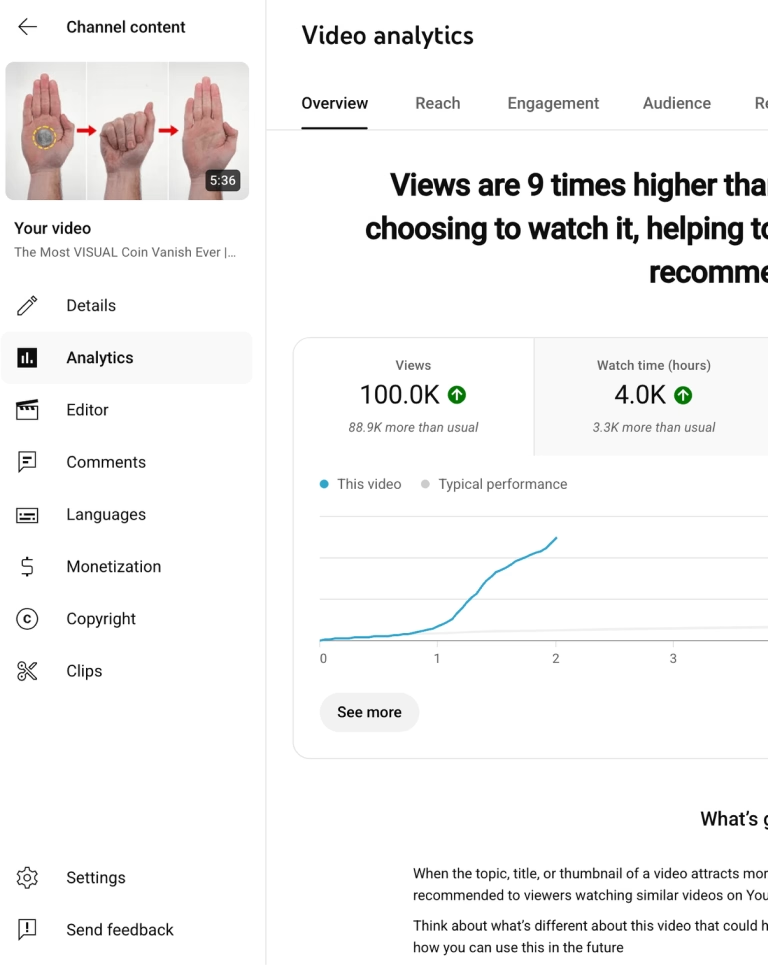
But here is what most people miss: YouTube did not just change distribution. It changed the relationship between audience and content. For the first time, viewers could tell a creator, in real time, exactly what they wanted. Comments, likes, watch time data, click-through rates — all of it feeding back into what gets made. Television never had this. It guessed at audiences. YouTube measures them.
AI is about to make that feedback loop instantaneous. And that changes everything.
What AI actually does to content
Let me be honest about something. Most of the current conversation about AI and media is focused on the wrong thing. People are worried about AI replacing writers, editors, presenters. That is a real concern, but it is not the most interesting one.
The more interesting question is what happens when AI can analyse, in granular detail, exactly why any given video succeeded or failed. Not just view counts. Not just watch time. But the precise moment a viewer clicked away, the exact thumbnail element that drove the click, the specific sentence structure in a title that made someone feel compelled to watch.
That information already exists. YouTube's algorithm processes it. But right now, it is largely a black box. AI is going to open that box. And when it does, the gap between creators who understand it and those who do not will become a chasm.
The brands that adapt will not just make better content. They will make content that is structurally engineered to perform. Not in a cynical, manipulative way - but in the same way that great film editors understand pacing, or great copywriters understand language. They will simply know more, more precisely, about what works.
The flood and the filter
Here is the tension at the heart of this moment. AI makes content creation dramatically easier. The barrier to producing a competent video - scripted, edited, packaged - is dropping every month. Within a few years, generating a decent looking video will require almost no technical skill at all.
Which means YouTube is about to be absolutely flooded with content.
And here is the counterintuitive part: that is actually good news for anyone who understands storytelling. Because when the platform fills up with technically adequate but emotionally empty content, the thing that becomes scarce is not production quality. It is genuine human perspective. Specific knowledge. Real experience. The kind of insight that comes from actually doing something, not from prompting a model to simulate someone who has.
Viewers are not stupid. They have always been able to tell the difference between a creator who has lived something and one who is performing knowledge they do not actually have. AI will make that distinction even more stark, because the baseline for technically competent content will rise so dramatically that the human elements — personality, specificity, earned credibility — will become the only meaningful differentiators left.
The race to the bottom on production quality will be won by machines. The race to the top on genuine human value is still very much open.
YouTube becomes the new search engine. Then the new television. Then something we do not have a word for yet.
Google already admits that younger audiences use YouTube as their primary search tool. Not for finding websites. For finding answers. They would rather watch a three minute explanation than read a ten paragraph article. That preference is not going to reverse. It is going to intensify.
As AI improves YouTube's ability to surface precisely the right video at the right moment, the platform becomes a more accurate mirror of human curiosity than anything that has existed before. Not just what people searched for, but what they watched all the way through. What made them subscribe. What they came back for. What they shared at midnight because they could not stop thinking about it.
That data, at scale, is the most detailed map of human attention ever assembled. And the brands and creators who build a presence within it are not just making content. They are becoming infrastructure.
Think about what that means practically. Red Bull does not need to buy a Super Bowl slot because they have already built a media empire that reaches every subculture they care about, on demand, for free. The BBC does not need primetime because Dragon's Den gets more views on YouTube than it ever did on BBC One. These are not outliers. They are early adopters of a model that will become the norm.
Brands that own attention are replacing brands that rent it. And the rent on borrowed attention keeps going up.
The creator becomes the institution
There is one more shift worth paying attention to, and it is the one that most established media organisations are least prepared for.
Individual creators - people with cameras and opinions and specific knowledge - now regularly outperform legacy media institutions on YouTube. Not occasionally. Consistently. The production budgets are not even comparable. A single person with a decent microphone and a genuine point of view can build an audience that a national newspaper would envy.
AI accelerates this. It gives individual creators access to tools that, until very recently, required entire teams. Research, editing, translation, thumbnail testing, script optimisation - all of it is being democratised at speed. The individual creator with AI assistance is becoming, in terms of output capacity, closer to a small media company than a hobbyist.
The institutions that survive will be the ones that understand this and work with it rather than against it. That means partnering with creators rather than trying to replicate what they do in-house. It means building YouTube strategies that feel like genuine channels, not repurposed press releases. It means accepting that the age of broadcast is over and the age of earned attention has fully arrived.
What this actually means for the next five years
I want to make some specific predictions, because vague forecasts are useless. These are my honest best guesses about what the YouTube and AI landscape looks like by 2030.
AI-powered personalisation makes the algorithm invisible.
Right now, viewers experience the algorithm as a homepage. By 2030, YouTube's feed will feel less like a platform and more like a personalised television channel, curated with enough precision that the distinction between content you searched for and content that found you will be meaningless. Creators who understand this will build content designed not just for search but for discovery.
The big brands will have networks, not channels.
A single channel serves a single audience. But brands have multiple audiences. The smarter move — already demonstrated by the BBC and Red Bull — is a network of focused channels, each owning a specific niche. AI will make this approach more manageable for smaller organisations, because the overhead of managing multiple channels will drop dramatically. Expect to see mid-size brands running three or four micro-channels within the next few years.
Long-form content beats paid advertising as a primary acquisition channel.
The economics are already moving this way. A video that performs well on YouTube does not stop working when you turn off the budget. It keeps generating views, subscribers, and leads for months or years. Paid ads need constant investment to maintain results. YouTube compounds. As more brands run this comparison seriously, the shift in media spend will accelerate.
The creators who survive the AI flood will be the ones with genuine authority.
Not charisma. Not production quality. Authority. The kind that comes from having actually done the thing you are talking about, having the receipts, having the specific perspective that cannot be generated. This is the most durable competitive advantage anyone can build on YouTube, and AI makes it more valuable, not less, because it becomes increasingly rare.
The last thought
We are living through the most significant restructuring of media in seventy years. The last time something this big happened, it was the arrival of television, and the organisations that adapted quickly built institutions that lasted generations. The ones that did not became footnotes.
YouTube, powered by AI, is not a trend. It is the new architecture of attention. And attention, as it has always been, is where influence lives. Where trust is built. Where the brands of the next decade are being decided right now, quietly, in the viewing habits of people who are simply watching what they actually want to watch.
The question is not whether your brand should be on YouTube. That ship has sailed. The question is whether you understand it well enough to use it. Because the brands that do are not just winning on a platform. They are building something that will outlast every ad campaign, every algorithm tweak, and every competitor that is still renting attention they should be earning.
Owen Creative is a YouTube strategy firm helping world-class brands turn attention into long-term growth.



.png)

.jpg)